CSaR Monthly Magazine of CUTM
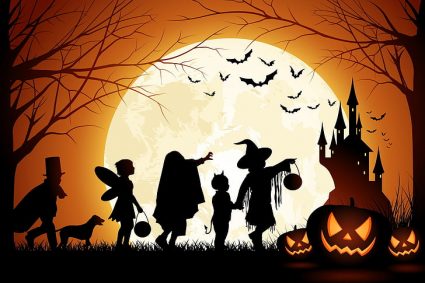
As October approaches, the world prepares to embrace the mystical allure of Halloween. It is a festival that transcends time and cultural boundaries, captivating hearts with its intriguing mix of ancient customs and modern celebrations. In this edition of our university’s monthly magazine, we take […]
Cover Stories FestivalAs October approaches, the world prepares to embrace the mystical allure of Halloween. It is a festival that transcends time and cultural boundaries, captivating hearts with its intriguing mix of ancient customs and modern celebrations. In this edition of our university’s monthly magazine, we take you on a journey through the history of Halloween, unearthing its enigmatic origins and tracing its fascinating evolution across the globe.

The Birth of Halloween: An Ancient Celtic Celebration
To truly understand Halloween’s essence, we must delve into its origins, which can be traced back to the ancient Celtic festival of Samhain. For the Celts, who lived in what is now Ireland, the United Kingdom, and northern France, Samhain marked the end of the harvest season and the beginning of the darker half of the year. Celebrated on the night of October 31st, it was believed that during this time, the boundary between the living and the spirit world blurred, allowing spirits to roam freely among the living.
The Celts lit bonfires and donned costumes made from animal hides to ward off malevolent spirits. They also left offerings of food and drink to appease the visiting souls, a tradition that eventually evolved into modern-day “trick-or-treating.”
Halloween: The Christian Influence
With the spread of Christianity, the church sought to assimilate pagan festivals into its religious calendar. In the 8th century, Pope Gregory III designated November 1st as All Saints’ Day, a day to honor saints and martyrs. The night before, October 31st, became known as All Hallows’ Eve, later shortened to Halloween.
As the influence of Christianity grew, the spiritual and supernatural elements of Halloween merged with the religious observance of All Hallows’ Eve. Customs such as lighting candles on graves, parades, and dressing up as saints or angels became popular, reflecting the synthesis of Celtic traditions and Christian practices.
Halloween in the New World: Blending of Cultures
When Irish and Scottish immigrants brought their Halloween traditions to North America in the 19th century, Halloween began to take on a new form. In the melting pot of cultures, elements of Native American, European, and African customs merged with the existing Halloween practices, giving rise to unique regional variations.
The practice of “guising” emerged in America, where children would go from door to door wearing costumes and performing tricks or songs in exchange for treats. This custom gradually evolved into the modern-day “trick-or-treating,” which has become one of the most beloved and widely recognized aspects of Halloween.
Jack-o’-Lanterns: A Tale of Folklore and Pumpkin Carving
One of the most iconic symbols of Halloween is the jack-o’-lantern. The legend originates from Irish folklore and tells the story of “Stingy Jack,” a cunning and deceitful man who tricked the devil himself. Denied entry to both heaven and hell upon his death, Jack was doomed to wander the Earth with only a hollowed-out turnip containing a burning coal to light his way.
When Irish immigrants arrived in America, they discovered that pumpkins, native to the continent, made excellent substitutes for turnips. Carving eerie faces into pumpkins, they continued the tradition of creating jack-o’-lanterns, adding a spooky touch to Halloween celebrations.
Halloween Goes Global: A Modern Celebration
In the 20th century, Halloween underwent significant transformations and expanded its reach beyond Celtic and Christian regions. The spread of American culture through media and popular culture contributed to the globalization of Halloween. Today, Halloween is celebrated in various countries, each incorporating their unique customs and traditions.
Countries like Japan, for instance, have embraced Halloween with a mix of their own cultural elements and Western influences. Costumes, parties, and themed events have become increasingly popular, creating a festive atmosphere that echoes the spirit of Halloween worldwide.
Halloween of Today: A Celebration of Creativity and Community
In the modern era, Halloween has evolved into a vibrant and inclusive festival celebrated by people of all ages. It has become an opportunity for self-expression and creativity, with individuals crafting elaborate costumes and transforming their surroundings with eerie decorations.
Moreover, Halloween has extended its scope beyond a single night, with themed events, haunted houses, and charity drives taking place throughout the month of October. This sense of community and togetherness exemplifies the spirit of Halloween, fostering a sense of belonging and shared joy.
As the sun sets and darkness falls on October 31st, the magic of Halloween envelops the world once more. Its origins may lie in the ancient Celtic festival of Samhain, but the celebration has grown far beyond its humble beginnings. From the flickering glow of jack-o’-lanterns to the laughter of children trick-or-treating, Halloween continues to captivate hearts and ignite the imagination.
Introduction Kabaddi, a sport that embodies the essence of strength, strategy, and stamina, has a mesmerizing history that spans centuries. Rooted in ancient Indian traditions, this indigenous game has evolved into a global phenomenon, captivating hearts across continents. In this article, we delve into the […]
SportsIntroduction
Kabaddi, a sport that embodies the essence of strength, strategy, and stamina, has a mesmerizing history that spans centuries. Rooted in ancient Indian traditions, this indigenous game has evolved into a global phenomenon, captivating hearts across continents. In this article, we delve into the magical journey of kabaddi, exploring its ancient origins and celebrating the exceptional players who have etched their names in its storied legacy.
Ancient Roots of Kabaddi
Kabaddi finds its roots in the ancient sport of “Chadukudu,” played in the southern region of India over 4,000 years ago. It was a popular pastime for warriors to display their physical prowess and develop self-defense skills. Over time, the game evolved into “Kabaddi,” incorporating elements of strategy, quick reflexes, and mental acuity.
The Evolution of Kabaddi
Kabaddi’s modern avatar was formalized during the Indian independence movement, where it gained momentum as a symbol of national pride and identity. The game’s popularity surged in the early 20th century, particularly in Punjab, where it became an integral part of cultural events and festivals.
The Kabaddi Federation and International Recognition
In 1950, the All India Kabaddi Federation (AIKF) was formed to govern and promote the sport at the national level. The AIKF’s efforts played a crucial role in standardizing the rules and organizing national championships, paving the way for kabaddi’s inclusion in the Asian Games in 1990.
Kabaddi’s Rise to International Prominence
The turning point for kabaddi’s global journey came in 2004 when the first-ever Kabaddi World Cup was held in Mumbai, India. The tournament showcased the sport’s thrilling nature, attracting international attention and kindling a renewed interest in kabaddi worldwide. Subsequent editions of the World Cup and the introduction of professional leagues catapulted kabaddi onto the international stage.
The Pro Kabaddi League (PKL) Revolution
In 2014, the Pro Kabaddi League was launched in India, revolutionizing the sport’s commercial landscape and captivating audiences like never before. The league’s success attracted prominent investors, celebrity endorsements, and a massive television viewership. With star players from around the globe, the PKL showcased kabaddi’s enthralling blend of skill, strategy, and sheer grit.
Noted Players Who Excelled in Kabaddi
Throughout kabaddi’s magical journey, several players have become synonymous with brilliance and excellence. Here are some of the most celebrated kabaddi players:
Kabaddi’s magical journey from its ancient roots to the grand global stage is a testament to its enduring appeal and the passion it evokes in fans worldwide. As the sport continues to garner international recognition and admiration, it stays true to its traditional essence, instilling the spirit of courage, camaraderie, and sportsmanship. With players displaying breathtaking raids, daring tackles, and strategic acumen, kabaddi remains an enchanting spectacle of strength and skill. As we celebrate the heroes of the game who have left an indelible mark, we eagerly look forward to the next chapter in kabaddi’s unfolding saga, where its legacy will continue to shine brightly for generations to come.
“Sapiens: A Brief History of Humankind” by Yuval Noah Harari is a thought-provoking and ambitious book that offers a sweeping overview of the history of Homo sapiens, from the emergence of our species to the modern era. Harari takes readers on an intellectual journey through […]
Book and Movie Review“Sapiens: A Brief History of Humankind” by Yuval Noah Harari is a thought-provoking and ambitious book that offers a sweeping overview of the history of Homo sapiens, from the emergence of our species to the modern era. Harari takes readers on an intellectual journey through time, delving into the key events and revolutions that have shaped human societies and transformed our species into the dominant force on Earth. The book’s strength lies in Harari’s ability to distill complex historical concepts into accessible and engaging narratives. His writing is informative, insightful, and at times, provocative, challenging conventional beliefs about the progress of human civilization.
“Sapiens” is divided into four parts: “The Cognitive Revolution,” “The Agricultural Revolution,” “The Unification of Humankind,” and “The Scientific Revolution.” Each section explores a significant milestone in human history, providing a comprehensive and cohesive account of our species’ evolution. In “The Cognitive Revolution,” Harari examines how Homo sapiens acquired the cognitive ability to create complex societies and engage in collective myths, such as religion and nationalism. He argues that these shared myths and imagined orders have united large groups of strangers, enabling them to cooperate on a massive scale. “The Agricultural Revolution” explores how the transition from hunting and gathering to agriculture transformed human societies. Harari discusses the implications of settling in one place, domesticating plants and animals, and creating surplus resources, which laid the foundations for hierarchical structures and social inequalities. “The Unification of Humankind” analyzes how Homo sapiens, through the process of globalization, conquered the world and established a global network of trade, cultures, and ideas. Harari contends that this unification also led to the spread of infectious diseases, environmental challenges, and the extinction of other species. In “The Scientific Revolution,” Harari explores how the rise of science and empirical thinking revolutionized human understanding of the world. He discusses the impact of scientific discoveries on medicine, agriculture, industry, and technology, shaping the modern world we inhabit today.
“Sapiens” is filled with fascinating historical insights that challenge conventional wisdom and invite readers to reevaluate their understanding of human history. Harari provocatively argues that much of the progress achieved by Homo sapiens has come at the expense of other species and ecosystems. He questions whether the rise of Homo sapiens and our pursuit of technological advancements have truly led to a more fulfilling and contented existence for all. One of the book’s central themes is the role of storytelling in shaping human societies. Harari contends that our unique ability to create and believe in fictional stories, such as myths, religions, and ideologies, has played a pivotal role in organizing human communities and fostering cooperation on a massive scale. This examination of human narratives offers a compelling perspective on the power of collective imagination and the construction of shared realities. While “Sapiens” is a compelling and enlightening work, it is not without its critics. Some argue that Harari occasionally oversimplifies complex topics and draws sweeping conclusions that may not be fully supported by evidence. Moreover, the book’s approach to history is broad and general, which may leave some readers craving more in-depth analysis of specific historical periods.
“Sapiens: A Brief History of Humankind” is a captivating and thought-provoking book that offers a panoramic view of human history and raises profound questions about the future of our species. Yuval Noah Harari’s ability to distill complex historical concepts into accessible narratives makes this book an excellent choice for readers interested in the trajectory of human civilization and the factors that have led us to become the dominant species on the planet. “Sapiens” challenges readers to reflect on the impact of Homo sapiens on the world and consider the ethical implications of our actions as a species. It is a thought-provoking and enlightening journey through time that encourages us to reevaluate our place in the grand tapestry of human history and our responsibilities to the world we inhabit. As a result, “Sapiens” is a compelling and essential read for anyone curious about the origins and development of human civilization.
The Roaring Twenties, also known as the Jazz Age or the Golden Twenties, was a remarkable decade that marked a period of significant cultural, social, and economic change. It emerged in the aftermath of World War I and was characterized by an exuberant spirit of […]
HistoryThe Roaring Twenties, also known as the Jazz Age or the Golden Twenties, was a remarkable decade that marked a period of significant cultural, social, and economic change. It emerged in the aftermath of World War I and was characterized by an exuberant spirit of modernity, flouting of traditional norms, and a flourishing of artistic and intellectual expression. The 1920s witnessed a unique blend of glamour, jazz music, and a quest for freedom, shaping a transformative era in the history of the United States and the world.
The 1920s saw a shift away from the conservative values that prevailed during the Victorian and Edwardian eras. The war had brought profound changes to society, leading to a disillusionment with traditional beliefs and a desire for liberation. Advances in technology and industry, such as the widespread use of electricity, the automobile, and mass production, epitomized the spirit of modernity. These innovations heralded a new era of convenience, efficiency, and consumer culture, shaping the contours of the modern world.
One of the defining cultural expressions of the Roaring Twenties was the emergence of jazz music, which originated in African American communities and quickly captivated a diverse audience. Jazz, with its syncopated rhythms and improvisational nature, became a symbol of liberation and rebellion against the conservative norms of the time. The music thrived in speakeasies, underground bars that served illegal alcohol during Prohibition, and clubs across the country. The Harlem Renaissance, centered in New York City’s Harlem neighborhood, became a cultural mecca for African American artists, musicians, and writers, contributing significantly to the flourishing of black culture and creativity.
The 1920s witnessed a new breed of women known as “flappers.” These young, independent-minded women challenged traditional gender roles and societal expectations. Flappers often sported short bobbed hairstyles, wore short dresses, smoked in public, and openly defied conventions. They sought adventure, freedom, and equality in a society that was slowly opening its doors to the idea of female emancipation. The image of the flapper became emblematic of the changing status of women and their growing influence on culture and society.
One of the most notable aspects of the Roaring Twenties was the nationwide prohibition of alcohol, which was enforced through the 18th Amendment to the United States Constitution. Prohibition aimed to curb social ills associated with alcohol consumption but instead gave rise to a flourishing illegal alcohol trade and the proliferation of speakeasies. Organized crime figures, such as Al Capone, gained notoriety during this time as they exploited the demand for alcohol, leading to a rise in crime rates and corruption.
The Roaring Twenties also marked the rise of Hollywood as the entertainment capital of the world. The film industry experienced significant growth during this decade, producing iconic silent films that featured legendary actors like Charlie Chaplin, Rudolph Valentino, and Greta Garbo. The glitz and glamour of Hollywood movies reflected the era’s fascination with larger-than-life personalities and extravagant lifestyles.
The Roaring Twenties was a decade of dramatic change and cultural transformation, leaving an indelible mark on modern society. It was a time of glamour, jazz, and the pursuit of liberation from traditional constraints. The spirit of modernity, the rise of jazz music, the emergence of the flapper, and the influence of Hollywood all contributed to shaping the cultural landscape of the era. However, the 1920s was also a period of contradictions, as the decade witnessed both prosperity and excess, as well as social and economic inequalities. Nevertheless, the Roaring Twenties remains an enduring symbol of the pursuit of freedom, individuality, and cultural expression, leaving a legacy that continues to inspire and captivate our imagination.
India, a land of diverse landscapes, harbors a magical secret that comes to life after dark – bioluminescent beaches. These stunning natural phenomena, caused by bioluminescent organisms in the water, create an ethereal aqua-colored glow that mesmerizes visitors. Let’s embark on a journey to some […]
NatureIndia, a land of diverse landscapes, harbors a magical secret that comes to life after dark – bioluminescent beaches. These stunning natural phenomena, caused by bioluminescent organisms in the water, create an ethereal aqua-colored glow that mesmerizes visitors. Let’s embark on a journey to some of India’s most enchanting bioluminescent beaches and uncover the scientific marvel behind this breathtaking spectacle.
Written by Hrithik Raj, B.Tech (CSE), 2nd Year
Radhanagar Beach – Andaman and Nicobar Islands:
Nestled in the Havelock Islands of Andaman and Nicobar, Radhanagar Beach is renowned for its pristine shores and exquisite beauty. During the monsoon season from June to September, visitors are treated to a celestial light show courtesy of bioluminescent plankton. The plankton emit a dreamy blue glow when agitated by the waves, creating an otherworldly experience. To witness this spectacle, a boat ride at night is the perfect way to immerse oneself in the luminous effect. The gentle disturbance in the water due to the boat’s movement reveals the magical bioluminescence, leaving visitors in awe of nature’s brilliance.
Morjim Beach – Goa:
Morjim, one of Goa’s most alluring beaches, is a captivating destination with more to offer than just its sandy shores. From June to September, bioluminescent plankton grace the waters of Morjim, casting a surreal glow on the beach at night. Visitors can take leisurely walks along the shore, where the soft waves create a magical play of lights. The bioluminescent plankton at Morjim are harmless to humans, making it safe to swim amidst the luminous display. Additionally, the beach is a nesting ground for Olive Ridley Sea turtles, adding another layer of wonder to this already enchanting location.
Bangaram Islands: Nestled amidst picturesque palm trees and serene coasts, Bangaram Islands offer a lesser-known bioluminescent experience. With its untouched beauty and secluded ambiance, the island provides a dreamlike setting for witnessing the luminous spectacle. The captivating view transports visitors to a fantasy realm, where nature’s wonders are on full display.
Conclusion:
Bioluminescence is a fascinating natural phenomenon caused by the light-emitting pigment “Luciferase” found within certain organisms. When these organisms experience even slight agitation, they release Luciferase, which interacts with oxygen to produce light. The resulting glow can vary in intensity, creating an ethereal display that captivates onlookers.
While bioluminescent beaches provide awe-inspiring sights, it is essential to embrace responsible tourism to preserve these delicate ecosystems. With global warming posing threats to bioluminescent species, it is crucial for visitors to minimize their ecological footprint by avoiding single-use plastics and following designated trails to protect the fragile ecosystem.
Reading a book by your favorite author often brings a sense of happiness and nostalgia, and such was the case when I picked up “The Man-Eater Series” by Jim Corbett, published by Rupa Publications. Jim Corbett, known not only as a hunter turned conservationalist but […]
Book Non-FictionReading a book by your favorite author often brings a sense of happiness and nostalgia, and such was the case when I picked up “The Man-Eater Series” by Jim Corbett, published by Rupa Publications. Jim Corbett, known not only as a hunter turned conservationalist but also a captivating narrator, weaves a mesmerizing tale of the idyllic sceneries of Kumaon and Garhwal, along with the rich flora and fauna of the region.
Written by Sameer Mohapatro. M.Sc.- Agriculture (2nd Year)
The book’s stunning cover design immediately captures the attention, with a fierce beast portrayed in all its glory, inviting readers to delve into its pages. And indeed, Corbett doesn’t disappoint. His writing is characterized by brevity, making the pages turn effortlessly, leaving us in awe of his storytelling prowess.
“The Man-Eater Series” revolves around Corbett’s thrilling encounters with man-eating tigers that terrorized the regions of Kumaon and Garhwal, now part of modern-day Uttarakhand. As readers, we are taken on an emotional journey as Corbett shares the challenges he faced while tracking these fearsome predators and the heart-wrenching decisions he had to make to protect the local communities.
Throughout the book, we encounter various characters, mainly the locals of Kumaon, with whom Corbett often interacts. Notably, his tracking adventures with his trusty guard dog, Robin, are both amusing and commendable, as Corbett chooses to face the dangers of the wild alone, relying on his bond with Robin.
Among the famous stories in the book, “The Bachelor of Powalgarh,” “The Chowgarh Tigers,” and “The Kanda Man-eater” stand out, gripping readers with their real-life incidents and captivating narrative. Corbett’s ability to undertake such perilous efforts in tracking the man-eaters, risking his own life, is truly commendable and evokes admiration.
While recounting his encounters, Corbett also highlights an essential aspect – not all tigers turn into man-eaters due to their natural inclination towards human blood. Instead, it is often a result of circumstances and desperation. This thought-provoking perspective adds depth to the book and emphasizes the need for conservation efforts.
As we journey with Corbett through the wild forests of Kumaon, Champawat, Chowgarh, Powalgarh, Mohan, Kanda, Pipal, and Thak, we feel deeply connected to the beauty and mysteries of the Indian wilderness. It’s no wonder that the Jim Corbett National Park was named in his honor, recognizing his tireless efforts to preserve these majestic creatures.
For nature and animal lovers seeking more than just facts, “The Man-Eater Series” promises an adventurous ride into the heart of India’s forests. Jim Corbett’s storytelling prowess and his dedication to tiger conservation make this book a must-read for anyone captivated by the allure of the wild.
The origins of ice skating can be traced back thousands of years, with its earliest form likely originating in the cold regions of Scandinavia and Northern Europe. Ancient drawings on cave walls depict people using bones or animal hooves attached to their feet to glide […]
SportsThe origins of ice skating can be traced back thousands of years, with its earliest form likely originating in the cold regions of Scandinavia and Northern Europe. Ancient drawings on cave walls depict people using bones or animal hooves attached to their feet to glide across frozen lakes and rivers. Over time, these rudimentary tools evolved into more sophisticated ice skates made of metal blades, allowing for smoother and more controlled movements on ice.
Written by M. Harika, B.Sc (Agriculture), 3rd Year
Ice skating gained popularity in the Netherlands during the 13th and 14th centuries, and by the 17th century, it had spread throughout Europe as a leisure activity and a mode of transportation during harsh winters. In the 19th century, the first artificial ice rinks were created, facilitating the expansion of ice skating’s popularity worldwide.
Several prestigious ice skating tournaments have emerged over the years, attracting top athletes from around the globe. The Winter Olympics, held every four years, feature ice skating disciplines like figure skating, speed skating, and ice hockey. Other notable tournaments include the World Figure Skating Championships, the European Figure Skating Championships, and the Four Continents Figure Skating Championships.
In India, ice skating is a niche sport due to the country’s predominantly warm climate. However, some regions, like Kashmir, offer a unique opportunity for the development of ice skating and winter sports. Kashmir, with its picturesque landscapes and abundant snowfall during winters, provides an ideal setting for nurturing winter sports activities.
Efforts to promote ice skating in India have been made through the establishment of ice rinks in places like Gulmarg in Kashmir and other hilly regions. These initiatives aim to attract both local enthusiasts and tourists, contributing to the growth of winter sports tourism in the country.
While the ice skating scene in India is still relatively small compared to more traditional sports, it has been gaining momentum in recent years. The Ice Skating Association of India (ISAI) plays a vital role in organizing national championships and providing a platform for young talents to showcase their skills.
The development of ice skating in Kashmir has also been part of a broader vision to promote sports and tourism in the region. With the establishment of infrastructure, coaching programs, and opportunities for athletes to train and compete, the potential for ice skating’s growth in the region is significant.
Sonam Wangchuk, a visionary engineer hailing from the breathtaking landscapes of Ladakh, has become a beacon of hope and inspiration for his groundbreaking innovations in the field of sustainable living and engineering. Born and raised amidst the majestic mountains, Wangchuk’s journey from a Ladakh-based engineer […]
Non-FictionSonam Wangchuk, a visionary engineer hailing from the breathtaking landscapes of Ladakh, has become a beacon of hope and inspiration for his groundbreaking innovations in the field of sustainable living and engineering. Born and raised amidst the majestic mountains, Wangchuk’s journey from a Ladakh-based engineer to a renowned innovator has been nothing short of remarkable.
Written by Sameer Mohapatro. M.Sc.- Agriculture (2nd Year)
Born in 1966 in Uleytokpo, a remote village in Ladakh, Sonam Wangchuk grew up surrounded by the serene beauty of nature and the challenges of living in a high-altitude region. As a young boy, he displayed a deep curiosity and fascination with science and engineering. Inspired by the natural wonders of his homeland and his desire to make a difference, Wangchuk embarked on a path of learning and exploration.
After completing his schooling, Wangchuk pursued a degree in mechanical engineering at the National Institute of Technology in Srinagar, Jammu, and Kashmir. His formal education honed his technical skills, but it was his profound connection with the Himalayas and its people that fueled his passion for finding sustainable solutions for life in the region.
In 1993, Wangchuk founded the Students’ Educational and Cultural Movement of Ladakh (SECMOL) to reform the educational system in Ladakh. The organization aimed to empower local students and encourage a practical and innovative approach to education, tailored to the unique challenges of the region.
Wangchuk’s story gained widespread recognition when he inspired the character of ‘Phunsukh Wangdu’ in the Bollywood blockbuster “Three Idiots.” Played by actor Aamir Khan, the character portrayed Wangchuk’s ingenuity and dedication to revolutionizing traditional learning methods. The movie brought his work to the national stage, making him a household name in India.
Wangchuk’s commitment to creating sustainable and climate-resilient living solutions for high-altitude regions led him to develop a groundbreaking mobile solar-powered tent for the Indian Army. Recognizing the challenges faced by soldiers deployed in harsh winter conditions, Wangchuk set out to provide them with a warm, eco-friendly, and cost-effective shelter.
The mobile solar-powered tent, accommodating up to 10 soldiers, presents an innovative solution that utilizes passive solar heating techniques to maintain a comfortable temperature within the sleeping chambers. The ‘greenhouse’ section harnesses solar energy during the day, while the insulated sleeping chamber keeps the temperature at a cozy 15 degrees.
Beyond his contributions to sustainable living and innovations for the Indian Army, Wangchuk’s vision extends to preserving the fragile ecosystems of the Himalayas and empowering local communities through education and eco-friendly practices.
His dedication to creating a positive impact on society has earned him recognition and accolades, and he continues to inspire the younger generation to explore the vast potential of science, engineering, and sustainable living.
Introduction Basketball, a sport that epitomizes grace, athleticism, and teamwork, has captured the hearts of millions worldwide. From its humble beginnings in a gymnasium to becoming a global phenomenon, basketball’s magical journey has been nothing short of extraordinary. In this article, we will embark on […]
SportsIntroduction
Basketball, a sport that epitomizes grace, athleticism, and teamwork, has captured the hearts of millions worldwide. From its humble beginnings in a gymnasium to becoming a global phenomenon, basketball’s magical journey has been nothing short of extraordinary. In this article, we will embark on a thrilling ride through the history of basketball, tracing its evolution into a beloved sport and celebrating the remarkable players who have left an indelible mark on the hardwood.
Origins of Basketball
The origins of basketball can be traced back to a cold December day in 1891 when Dr. James Naismith, a physical education instructor in Springfield, Massachusetts, sought to create an indoor sport to keep students active during the winter months. Inspired by a childhood game, Naismith nailed two peach baskets to the gymnasium balcony and devised a set of 13 basic rules for the game. Little did he know that his creation would go on to transform the world of sports.
The Early Days and Spread of Basketball
In its early years, basketball was a simple and relatively unknown game, but its appeal quickly grew. The first official game was played at the International YMCA Training School in January 1892. As the game spread through schools and YMCAs, its popularity skyrocketed, leading to the formation of the National Basketball League (NBL) in 1937.
The Birth of the NBA
The National Basketball Association (NBA) was formed in 1946 when the NBL merged with the Basketball Association of America (BAA). The NBA’s inaugural season in 1946-1947 featured 11 teams, and the sport began to gain traction as a professional league. However, it wasn’t until the arrival of a towering star that basketball would truly take off on the world stage.
The Magic of Michael Jordan
In the 1980s and 1990s, one player would redefine the sport and become a global icon – Michael Jordan. His soaring dunks, clutch performances, and six NBA championships with the Chicago Bulls earned him the title of “His Airness.” Jordan’s charisma transcended the sport, and he became a cultural phenomenon, inspiring millions to take up basketball.
The Globalization of Basketball
As the NBA’s popularity soared, the league embarked on international exhibition games, showcasing the sport’s allure on a global scale. The 1992 Barcelona Olympics marked a turning point when the “Dream Team,” featuring NBA superstars like Jordan, Magic Johnson, and Larry Bird, dominated the competition and introduced basketball to an international audience.
The Rise of Global Basketball Stars
The globalization of basketball opened doors for players from around the world to compete at the highest level. Players like Dirk Nowitzki (Germany), Yao Ming (China), Manu Ginobili (Argentina), and Pau Gasol (Spain) made significant impacts in the NBA, showcasing the sport’s universal appeal.
The LeBron James Era
In the 21st century, LeBron James emerged as one of the most dominant players in basketball history. With his extraordinary skill set, versatility, and court vision, James captured multiple NBA championships and achieved legendary status in the sport.
The Evolution of the Game
Throughout basketball’s magical journey, the game has witnessed significant evolution. From fast-paced transitions to the rise of three-point shooting and small-ball lineups, the sport has adapted to the changing times while maintaining its essence as a team-oriented game.
Noted Players Who Excelled in Basketball
Several players have left an indelible mark on the sport of basketball. Here are some of the most celebrated names:
From its humble origins in a gymnasium to becoming a global spectacle, basketball’s magical journey has been one of sport’s most captivating tales. Driven by legends like Michael Jordan, LeBron James, and countless others, basketball has transcended borders and cultures, uniting fans across the globe. As the sport continues to evolve, it remains a symbol of determination, teamwork, and sheer athleticism. The rhythmic bounce of the ball, the thunderous dunks, and the thrilling buzzer-beaters all contribute to the enduring enchantment of basketball. As we celebrate its past and present, we eagerly anticipate the next chapter of hoops and heroes that will shape the future of this mesmerizing sport.
Pongal, also known as Makar Sankranti, is one of the most significant festivals celebrated in the Telugu-speaking regions of India. It is a harvest festival that marks the transition of the sun into the zodiac sign of Capricorn (Makar Rashi). Pongal is not only a […]
Culture Non-FictionPongal, also known as Makar Sankranti, is one of the most significant festivals celebrated in the Telugu-speaking regions of India. It is a harvest festival that marks the transition of the sun into the zodiac sign of Capricorn (Makar Rashi). Pongal is not only a celebration of abundance and gratitude but also holds deep historical and cultural significance. Let’s delve into the rich history of Pongal, its significance, and its impact on Telugu culture.
Written by M. Harika, B.Sc (Agriculture), 3rd Year
Historical Background:
Pongal has its roots in ancient Tamil culture and has been celebrated for thousands of years. The festival finds mention in early Tamil literature, including the Sangam literature, which dates back to the 3rd century BCE to the 3rd century CE. Pongal is believed to have been celebrated even during the Sangam period, emphasizing its antiquity.
Significance of Pongal:
Harvest Celebration: Pongal is primarily an agrarian festival celebrated to express gratitude for a bountiful harvest. It is a time when farmers rejoice in the abundance of their crops and offer thanks to the Sun God, Surya, for providing them with energy and sustenance.
Seasonal Transition: Pongal also marks the transition of the sun into the zodiac sign of Capricorn, symbolizing the end of winter and the onset of longer days. The festival signifies the gradual return of warmth, light, and new beginnings, making it a time of joy and hope.
Cultural and Social Significance: Pongal is not just a religious festival but also a time for families to come together and celebrate. It promotes unity, harmony, and a sense of community among people. The festival strengthens familial bonds as relatives gather to prepare and share traditional Pongal dishes.
Pongal and Telugu Culture:
In the Telugu-speaking regions of India, Pongal holds immense cultural importance. The festival is observed with great enthusiasm, and various customs and traditions are followed to celebrate this auspicious occasion.
Bhogi: The first day of Pongal is known as Bhogi. People discard old and unwanted items from their homes and light a bonfire, symbolizing the destruction of evil and the renewal of life. In rural areas, farmers burn agricultural waste and perform traditional dances around the bonfire.
Preparation of Pongal: The second day, also known as Thai Pongal, is the main day of celebration. Women draw beautiful kolams (rangoli) in front of their houses, and the Pongal dish, made from freshly harvested rice and jaggery, is cooked outdoors in decorated clay pots. The boiling over of the Pongal dish is considered auspicious and is met with joyous shouts of “Pongalo Pongal!”
Kanuma: The third day of Pongal is called Kanuma, which is dedicated to livestock. Cattle are adorned with colorful decorations, and farmers express their gratitude to these animals, which play a vital role in agricultural activities.
Festive Attire: During Pongal, people wear traditional attire like sarees and dhotis, showcasing the rich cultural heritage of Telugu traditions. Traditional music and dance performances, such as Kolatam and Lambadi, add to the festivities.
Exchange of Gifts: Pongal is a time of giving and receiving. People exchange gifts and sweets with family members, friends, and neighbors, fostering a sense of camaraderie and goodwill.
THE IMPACT OF PONGAL ON TELUGU CULTURE
The celebration of Pongal has a profound impact on Telugu culture in several ways:
Agricultural Heritage: Telugu culture has deep roots in agriculture, and Pongal celebrates the agricultural heritage of the region. The festival highlights the importance of farming and the significance of the harvest. It reinforces the connection between the people and the land, emphasizing the reliance on nature’s bounty for sustenance.
Community Bonding: Pongal brings communities together, strengthening social bonds and fostering a sense of unity. Families and neighbors come together to prepare and share the Pongal dish, creating an atmosphere of camaraderie and harmony. The festival promotes social cohesion and provides an opportunity for people to connect, exchange greetings, and strengthen relationships.
Cultural Preservation: Pongal serves as a platform for preserving and promoting Telugu cultural traditions. The festival showcases the vibrant colors, traditional attire, music, and dance forms of the Telugu community. By participating in Pongal celebrations, the younger generation gets exposed to and learns about their cultural heritage, ensuring its continuity and preservation.
Folk Arts and Performances: Pongal provides a platform for showcasing traditional Telugu folk arts and performances. Various art forms, such as Kolatam, Lambadi, and other folk dances, are performed during the festival. These performances not only entertain but also serve as a means of passing down cultural stories, values, and rituals from one generation to another.
Culinary Traditions: Pongal is closely associated with traditional Telugu cuisine. The preparation of the Pongal dish, made from freshly harvested rice and jaggery, is a culinary art in itself. The festival celebrates the flavors and culinary expertise of the Telugu community, promoting traditional cooking techniques and recipes. It ensures the preservation of traditional food practices and encourages the use of local, seasonal ingredients.
Ethical Values: Pongal is not just about celebrating abundance but also about expressing gratitude and sharing with others. The festival instills ethical values such as gratitude, generosity, and compassion. People exchange gifts and sweets, donate to the needy, and engage in acts of charity during Pongal, reflecting the spirit of giving and sharing.
Economic Impact: Pongal has a significant economic impact on Telugu culture. It is a time of increased economic activity, particularly in rural areas. Farmers benefit from the harvest season, and markets thrive with the sale of agricultural produce, traditional attire, and festive goods. The festival also boosts tourism, as people from various parts of the country and abroad visit Telugu-speaking regions to experience the vibrant Pongal celebrations.
In conclusion, Pongal has a profound impact on Telugu culture by promoting agricultural heritage, community bonding, cultural preservation, folk arts, culinary traditions, ethical values, and economic prosperity. The festival serves as a platform for the Telugu community to come together, celebrate their traditions, and pass them on to future generations, ensuring the preservation and vitality of Telugu culture.